|

|
2009-07-28 19:55:47-04 |
|
|
Cleaning up the studio this afternoon and putting threads away, I found myself looking at a skein of Ecru DMC. I suddenly realized I forgot Ecru!! If you're planning to stitch along with the Long and Short stitch lessons, add Ecru to your list! I've updated the original post on materials. Sorry about that!!


|
|
|
|
2009-07-29 05:43:14-04 |
|
|
What makes an embroidery hoop good? Below are my criteria for a good hoop, and later on, I'll show you how to make a good hoop even better.
The purpose of an embroidery hoop is to hold taut the fabric that's in it. For most embroidery (though not all - depends on the type of stitch), I like my fabric to be drum tight - that is, if I flick it with my fingers, it sounds a bit like a drum. There are different ways to achieve drum-tight fabric for stitching: a slate frame, stretcher bar frames, or a hoop. Now, for a hoop to achieve drum-tightness and maintain it for a reasonable amount of time, a good hoop is essential.
So... my question: what makes a hoop good? This (below) is a good hoop:
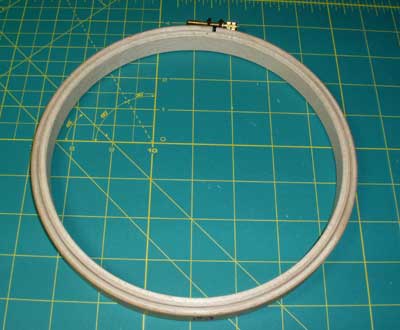
This is a 7" round hoop that's 5/8" deep. It has all-brass hardware, and the outer ring fits the inner ring very well, without any warping.
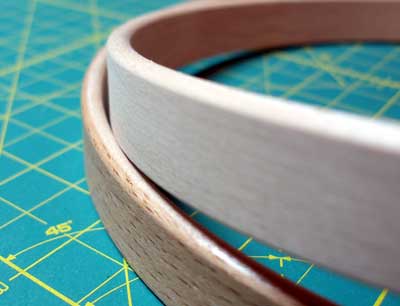
The hoop is made from birch wood and is strong and solid - unless you're super-duper ridiculously strong (like Captain Caveman strong), I don't think you could bend it out of shape with your hands! It's got a natural finish and is smoothly polished, so there are no splintery bits that can snag your threads or your hands.
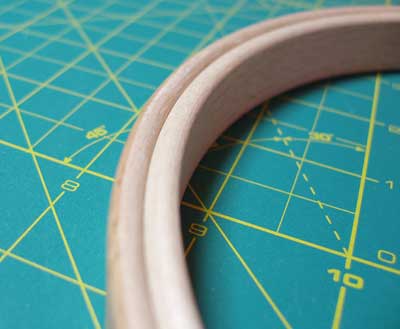
When the rings are together and the outer ring is tightened, there are no gaps between the outer ring and the inner. They're a perfect match. (Awwwww...)
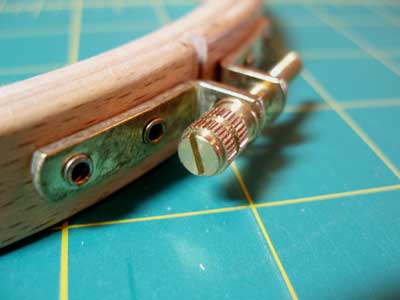
The hardware, again, is all brass. The brass brackets are not flimsy - they're strong and durable, and they don't bend, no matter how much you tighten the screw. The screw has outer ridges that serve as grips for tightening, and it also has a slash in it for a screwdriver, so that you can Really tighten the thing up.
This is a good hoop. The 5/8" depth is perfect for medium weight fabrics, though I also use it on some finer weight fabrics as well. Muslin, shadow weight linen, dower quality linen - this hoop works with all of them. For heavier weight fabric, like linen twill, I'm more inclined to use a 7/8" deep hoop, but this hoop actually works fine with twill, too. It's a good all-purpose hoop in an all-purpose size. The 7" diameter ring is an easy fit for my hands. Anything larger, actually, becomes cumbersome when it comes to working on the fabric in the middle. I generally like 6" and 7" hoops best.
When you buy a hoop, you want to look for one that fits well in your hands. You should be able to hold the edge of your hoop in your palm, secured by your thumb, and stretch your fingers easily to the center of the hoop. Larger hoops (10" and larger, especially) are generally best managed with some kind of stand to support them (or at least the lip of a table), so that, when necessary, you have both hands free to reach the center of the fabric in the hoop.
The hoop featured above is a Hardwick Manor hoop, made in Germany and imported into the States by Access Commodities. You can find these hoops through many fine online needlework shops. I usually get mine through Needle in a Haystack.
A hoop pointer: Always take your fabric out of your hoop when you finish a stitching session. Doing so reduces the chance of permanent hoop marks or dirt rings. Plastic hoops with a lip are more prone to dirt rings than good wooden hoops, though, because the lip tends to catch dust and dirt.
Coming up later: I'll show you how to bind a hoop easily, to achieve better long-lasting tension and to eliminate stress on your fabric. I don't bind all my hoops, but I do bind some, and I like them bound. I'll show you how!


|
|
|
|
|
2009-07-28 19:55:47-04 |
|
|
Cleaning up the studio this afternoon and putting threads away, I found myself looking at a skein of Ecru DMC. I suddenly realized I forgot Ecru!! If you're planning to stitch along with the Long and Short stitch lessons, add Ecru to your list! I've updated the original post on materials. Sorry about that!!
|
|
|
|
2009-07-29 05:43:14-04 |
|
|
What makes an embroidery hoop good? Below are my criteria for a good hoop, and later on, I'll show you how to make a good hoop even better.
The purpose of an embroidery hoop is to hold taut the fabric that's in it. For most embroidery (though not all - depends on the type of stitch), I like my fabric to be drum tight - that is, if I flick it with my fingers, it sounds a bit like a drum. There are different ways to achieve drum-tight fabric for stitching: a slate frame, stretcher bar frames, or a hoop. Now, for a hoop to achieve drum-tightness and maintain it for a reasonable amount of time, a good hoop is essential.
So... my question: what makes a hoop good? This (below) is a good hoop:
This is a 7" round hoop that's 5/8" deep. It has all-brass hardware, and the outer ring fits the inner ring very well, without any warping.
The hoop is made from birch wood and is strong and solid - unless you're super-duper ridiculously strong (like Captain Caveman strong), I don't think you could bend it out of shape with your hands! It's got a natural finish and is smoothly polished, so there are no splintery bits that can snag your threads or your hands.
When the rings are together and the outer ring is tightened, there are no gaps between the outer ring and the inner. They're a perfect match. (Awwwww...)
The hardware, again, is all brass. The brass brackets are not flimsy - they're strong and durable, and they don't bend, no matter how much you tighten the screw. The screw has outer ridges that serve as grips for tightening, and it also has a slash in it for a screwdriver, so that you can Really tighten the thing up.
This is a good hoop. The 5/8" depth is perfect for medium weight fabrics, though I also use it on some finer weight fabrics as well. Muslin, shadow weight linen, dower quality linen - this hoop works with all of them. For heavier weight fabric, like linen twill, I'm more inclined to use a 7/8" deep hoop, but this hoop actually works fine with twill, too. It's a good all-purpose hoop in an all-purpose size. The 7" diameter ring is an easy fit for my hands. Anything larger, actually, becomes cumbersome when it comes to working on the fabric in the middle. I generally like 6" and 7" hoops best.
When you buy a hoop, you want to look for one that fits well in your hands. You should be able to hold the edge of your hoop in your palm, secured by your thumb, and stretch your fingers easily to the center of the hoop. Larger hoops (10" and larger, especially) are generally best managed with some kind of stand to support them (or at least the lip of a table), so that, when necessary, you have both hands free to reach the center of the fabric in the hoop.
The hoop featured above is a Hardwick Manor hoop, made in Germany and imported into the States by Access Commodities. You can find these hoops through many fine online needlework shops. I usually get mine through Needle in a Haystack.
A hoop pointer: Always take your fabric out of your hoop when you finish a stitching session. Doing so reduces the chance of permanent hoop marks or dirt rings. Plastic hoops with a lip are more prone to dirt rings than good wooden hoops, though, because the lip tends to catch dust and dirt.
Coming up later: I'll show you how to bind a hoop easily, to achieve better long-lasting tension and to eliminate stress on your fabric. I don't bind all my hoops, but I do bind some, and I like them bound. I'll show you how!
|
|
|
| |

