“Thread Log” is a strange name. But that’s what I call it. And it seems to work.
Whenever I receive an order of embroidery threads for specific large embroidery projects, I log them in a project notebook. In fact, I log everything I can about the project in the notebook. I started doing this when I was working on this church embroidery project, and I found it’s a very useful when I want to remember specifics about a particular embroidery project.
Most of all, the notebook ends up being a Thread Log, because that’s the majority of information that I note – the thread and how and where I used it, or the thread, and how I didn’t use it. I also include information on time involved and on quantities.
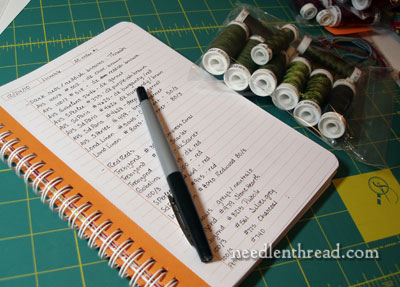
I have no doubt there are more efficient ways to do this, but this is the way I like to do it. A notebook is easy, portable, uncomplicated.
So on that blissful day when the post arrives with a much-anticipated order of new thread, I unpack the package with my notebook handy. I examine each item in the order, cross checking it with the invoice, and write it down in the notebook, under the name of the project I ordered it for. If a thread doesn’t come with a specific manufacturer’s description, I concoct enough of a description of the thread so that I know basically what it is. For example, there are some threads that only have color numbers, not names indicative of the color, so I’ll describe the color: brick red – dk, brick red – lt, and so forth.
With the actual invoice that comes with the order, I jot down on it any project names related to the threads therein, hole-punch it, and put it in a binder.
Some day soon, I plan to go through all my threads and work them into a thread inventory system of sorts. Needle Artworks has a free thread inventory system that covers a wide range of thread manufacturers. It’s a great concept! But many of the inventory lists haven’t been updated in several years. I know there are thread inventory software programs out there, too, which are actually a very good idea, especially for tracking large and expensive stashes for insurance purposes, if nothing else. Flood or fire can ruin a stash, and replacing it can be a costly endeavor. For me, I’m working up my own “database” – which is really just an excel file. But it works!
For those of us who embroider mostly for fun, keeping strict track of supplies, stitches, time involved, and so forth is not really necessary, though if you like the process of jotting and journaling, it can be a good way of keeping track of what you’ve done. But if you’re in the “business” in any way – if you take commissions, if you teach classes and sell kits (even just at the neighborhood volunteer level), it’s a good idea to keep track of what you use, how you use it, the time involved, and how much it costs you. That way if you ever need to reproduce a project, you have the essentials written down.
What about you? Do you keep track of your stitching endeavors, supplies, ideas, and so forth in any specific tangible way? If so, how? Any ideas you’d like to share with the rest of us? Leave a comment and let us know! We can all benefit from each other’s experiences on these types of things!
Tomorrow, a give-away: A Trish Burr kit, and a little surprise or two along with it. So look for that!
Hope your week is going well!